











In 2026, sneaker releases have evolved from “manual speed competition” to “automation and resource competition.” For sneaker bot teams, success is no longer determined solely by scripts, but by the underlying network environment and proxy configuration. Whether it’s multi-account operations, account warm-up, or high-concurrency checkout during drops, proxy is a critical foundation of the entire automation system.
This article breaks down the key role of proxy in sneaker automation from a practical perspective, and provides a complete setup strategy from account warm-up to drop execution, helping you build a stable, high-success sneaker bot system.
I. Why Sneaker Bots Rely on Proxy
For individual users, automation may only improve efficiency slightly. But for sneaker bot teams, it is essentially a large-scale concurrency competition. Without proper proxy configuration, account systems, concurrency capacity, and overall success rates will be severely limited.
1. IP isolation for multi-account systems
Sneaker bot teams often operate dozens or even hundreds of accounts across different platforms or for the same drop.
Platforms typically monitor:
- Multiple accounts sharing the same IP
- High-frequency actions from a single IP
- Abnormal login environment switching
Once triggered, this may lead to account bans, invalid raffle entries, or canceled orders.
Therefore, the core role of proxy is:
- Building account-level IP isolation (one account, one IP)
- Reducing account linkage
- Ensuring long-term account usability
2. Request distribution under high concurrency
The main advantage of sneaker bots is running large numbers of tasks simultaneously. However, a single IP cannot handle high request volumes.
This may result in:
- Rate limiting
- 403/429 errors
- Dropped requests
By using a rotating proxy pool, teams can:
- Assign a dedicated IP to each task
- Distribute requests across different IPs
- Run large-scale concurrent operations without triggering risk control
3. Stability for automated scripts
Sneaker bots often run 24/7 across multiple release cycles. Without stable proxy support:
- IPs may frequently fail or get blocked
- Request latency may fluctuate
- Tasks may fail during critical moments
A high-quality proxy system should provide:
- Stable connections
- Continuous rotation capability
- High anonymity
4. Geo strategy and maximizing release opportunities
Professional teams usually target multiple regions instead of a single market. However, most platforms restrict access based on IP location.
With proxy, teams can:
- Deploy across multiple regions
- Participate in multiple regional drops simultaneously
- Increase overall success probability
5. Risk control and long-term operation
Short-term wins are easy, but maintaining long-term stability without bans is the real challenge.
Platforms continuously upgrade risk control mechanisms, including:
- IP reputation scoring
- Behavioral pattern detection
- Device + IP fingerprinting
Low-quality proxy may lead to:
- Declining success rates
- Frequent CAPTCHA
- Gradual account degradation
II. How to Improve Sneaker Bot Success Rate with Proxy Setup
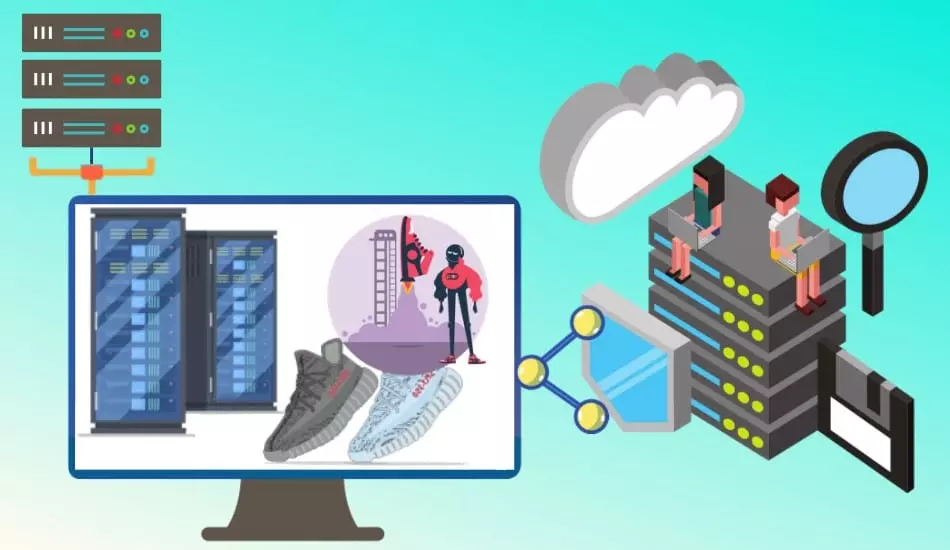
For sneaker bot teams, proxy configuration is not just “plug and play.” It should be divided into two stages:
- Warm-up stage: prioritize stability (dedicated static residential proxy)
- Drop stage: prioritize concurrency (rotating residential proxy pool)
1. Multi-account setup and warm-up stage
In practice, teams need to prepare a large number of accounts for raffles, queues, and drops. However, common issues include:
- Frequent CAPTCHA on new accounts
- Login environment restrictions or account freezes
- Account linkage detection
- Lack of realistic user behavior history
These issues are mainly caused by unstable or untrusted network environments.
Dedicated static residential proxy can effectively solve these problems. In real-world deployments, many teams use IPFoxy’s dedicated static residential proxy for account registration and warm-up due to its strong stability and clean IP resources.
Compared with rotating proxy, dedicated static residential proxy is more suitable for this stage because it closely simulates real user behavior:
- ISP-based residential IP, similar to real home networks
- Long-term fixed IP for stable account profiles
- One account per IP to reduce linkage risks
Recommended setup:
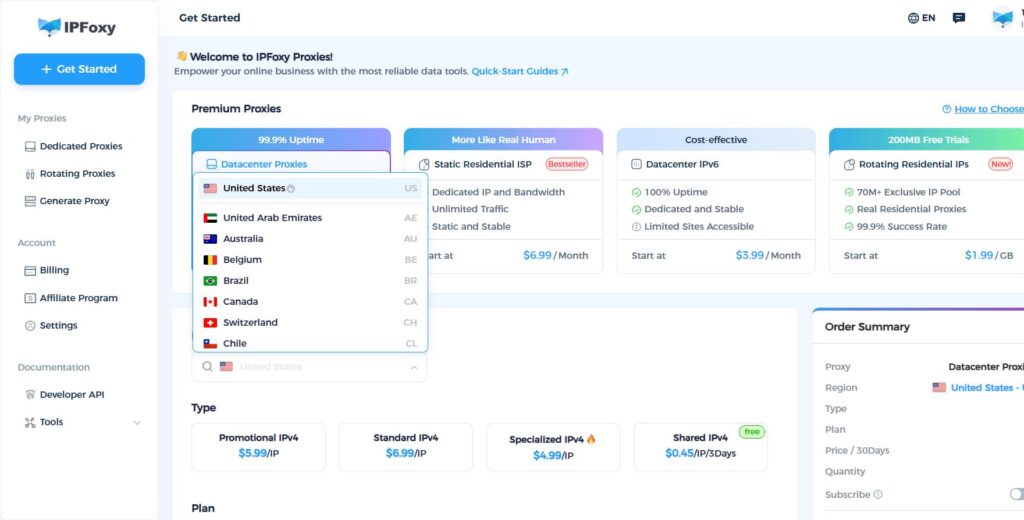
- Prepare proxy matching the target release region, including endpoint, port, and authentication
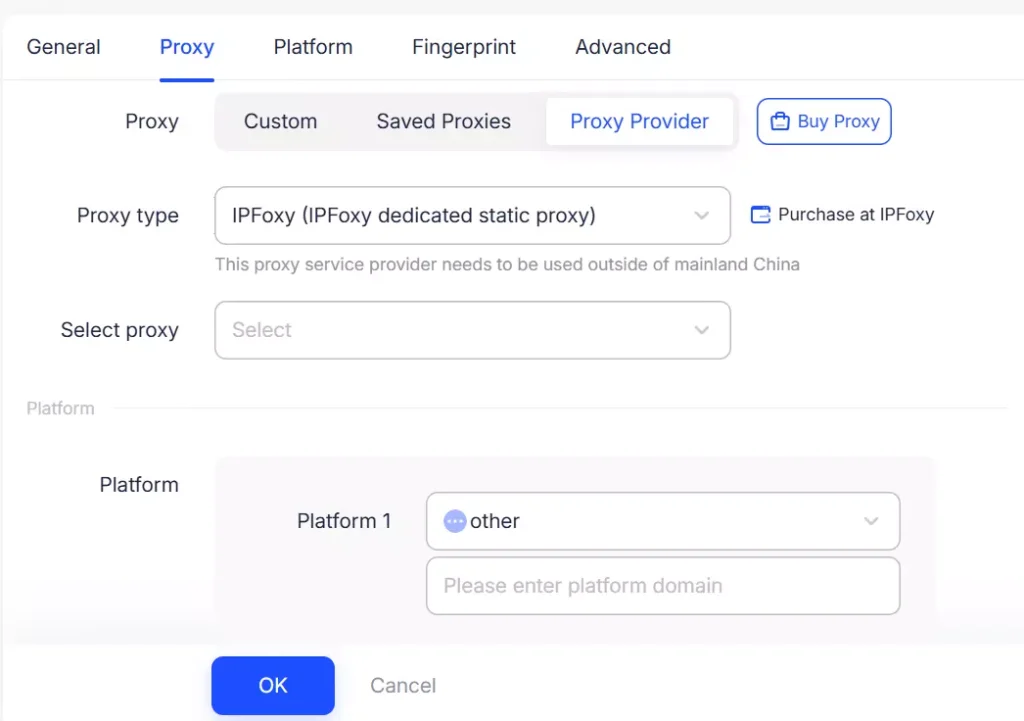
- Configure independent environments using Anti-detect browser, binding each account to a unique IP
- Warm up accounts 1–2 weeks in advance with daily browsing and activity simulation
- Maintain a stable environment before release, avoiding frequent IP or device changes
2. Sneaker bot configuration for drop stage
At the moment of release, the goal shifts to sending massive requests within a very short time to secure inventory.
Common issues include:
- High request frequency causing blocking
- Multiple tasks sharing one IP leading to failure
- IPs being flagged quickly
- Insufficient concurrency missing the drop window
The root problem is insufficient IP resources for high concurrency. Therefore, teams typically switch to rotating residential proxy during this stage.
In practice, services like IPFoxy provide large-scale rotating residential proxy pools with automatic IP rotation and session control, making them suitable for high-concurrency sneaker bot scenarios.
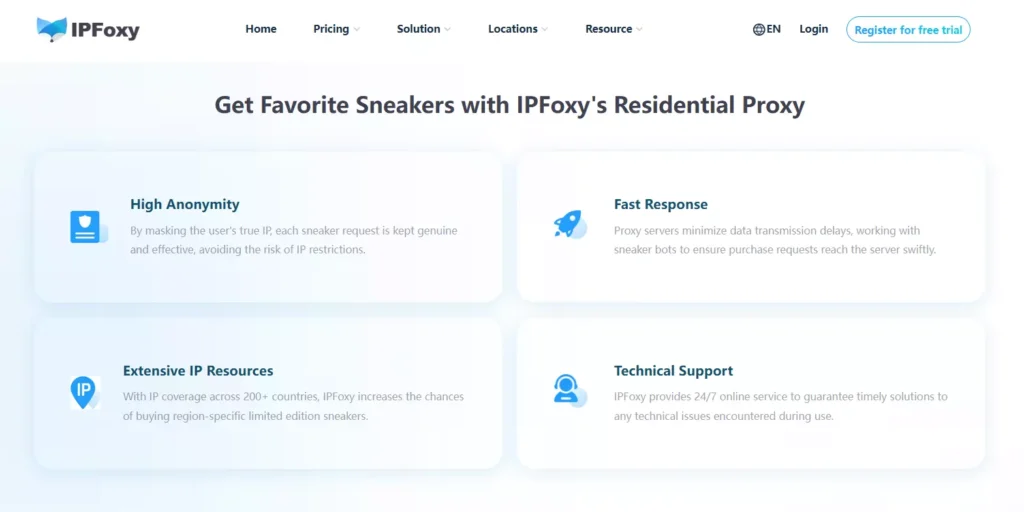
Core advantages:
- Distribute request sources to avoid IP overload
- Automatically rotate IPs to handle high-frequency limits
- Support multi-region nodes for faster response
Step 1: Connect rotating proxy pool
IPFoxy rotating residential proxy provides large-scale IP resources and supports automatic rotation. You can integrate the proxy into your bot environment as the request gateway.
import urllib.request

proxy = urllib.request.ProxyHandler({
    'http': 'username:password@gateway.ipfoxy.com:port',
    'https': 'username:password@gateway.ipfoxy.com:port'
})

opener = urllib.request.build_opener(proxy)
urllib.request.install_opener(opener)

response = urllib.request.urlopen('http://httpbin.org/ip')
print(response.read())
Step 2: Multi-threaded concurrent requests
import requests
import threading

proxy_pool = [
    'http://user:pass@gateway.ipfoxy.com:port1',
    'http': 'http://user:pass@gateway.ipfoxy.com:port2',
]

def task(proxy):
    try:
        r = requests.get('https://example.com', proxies={
            'http': proxy,
            'https': proxy
        }, timeout=5)
        print("Success:", proxy)
    except:
        print("Fail:", proxy)

threads = []
for i in range(50):
    proxy = proxy_pool[i % len(proxy_pool)]
    t = threading.Thread(target=task, args=(proxy,))
    threads.append(t)
    t.start()
Step 3: Control request frequency
import time, random

time.sleep(random.uniform(0.5, 2.0))
Step 4: Retry and IP switching mechanism
def retry_task(max_retry=3):
    for _ in range(max_retry):
        proxy = get_new_proxy()
        if task(proxy):
            return True
        time.sleep(1)
    return False
III. FAQ
It is not recommended to run multiple high-frequency tasks on the same IP. Ideally, use one IP per task or rotate through a proxy pool.
Yes. Sneaker drops are millisecond-level competitions. Lower latency gives a clear advantage. Choose proxy nodes close to the release region.
For small-scale operations, provider proxy pools are sufficient. For larger setups, using API-based dynamic proxy management allows more flexible scheduling.
IV. Conclusion
Sneaker botting is not just about being faster, but about being more stable and scalable. From account warm-up to high-concurrency execution, every stage depends on proper proxy configuration.
In practice, choosing a reliable proxy provider such as IPFoxy can significantly improve stability, reduce failure rates, and enhance long-term operational performance. Only by balancing stability and concurrency can you continuously increase your success rate.