












Best Messaging Tools for US Market Lead Generation: Telegram vs WhatsApp vs LinkedIn (2026 Guide)
When developing customers in the US market, Telegram, WhatsApp, and LinkedIn are the three most commonly used messaging tools. However, they serve completely different roles in traffic acquisition, conversion, and customer management. Choosing the right tool at each stage directly impacts efficiency and sales performance.
This article compares the three tools from use cases, core features, and practical strategies, helping you build a clear and effective lead generation workflow.
I. Why Choosing the Right Messaging Tool Matters in the US Market
In the US market, messaging tools are not just communication channels. They directly affect reply rates, trust building, and conversion outcomes. Compared to traffic acquisition alone, choosing the right tool is often more critical.
1. It affects whether customers respond
US users are generally cautious with unfamiliar messages. If the communication channel does not match user habits, even large traffic volumes may not convert into meaningful interactions.
2. It determines trust and conversion efficiency
Customer conversion relies on a gradual trust-building process. The right tool can significantly shorten this path and improve deal success rates.
3. It impacts long-term operational stability
Each platform has different rules and risk control mechanisms. Improper usage can lead to restrictions or account bans. Multi-account operations also require stable environments. Poor early tool choices can limit future scalability.
II. Telegram vs WhatsApp vs LinkedIn: Core Comparison
In US market lead generation, different tools serve different stages. Some are used for traffic acquisition, others for conversion, and others for trust building. Using only one tool is not enough to cover the full funnel.
1. Telegram
Telegram is mainly a traffic acquisition tool, ideal for early-stage user growth.
Features:
- Supports groups and channels for large-scale outreach
- Can integrate bots for automation
- Relatively loose risk control, suitable for multi-account use
Limitations:
- Lower user trust
- Not suitable for direct conversion, requires redirection to other tools

2. WhatsApp
WhatsApp is primarily a conversion tool and plays a key role in closing deals.
Features:
- Large user base with established habits
- Phone number-based system increases trust
- Ideal for one-on-one communication and follow-ups
Limitations:
- Sensitive to high-frequency operations
- Restricted bulk messaging capabilities
3. LinkedIn
LinkedIn is a precision lead generation tool, especially valuable in B2B scenarios.
Features:
- Large base of professionals and decision-makers
- Advanced filtering by industry, role, and more
- Strong built-in trust
Limitations:
- Strict risk control on connection and outreach
- Slower lead generation speed

4. Quick comparison table
| Dimension | Telegram | ||
| Tool role | Traffic acquisition | Conversion | Precision lead generation |
| User type | Niche communities | General users | Business professionals |
| Main use case | Bulk outreach, community growth | Private chat, conversion, retention | Targeted outreach, partnerships |
| Acquisition method | Groups, channels, automation | Direct messaging, contacts | Search, connections, content |
| Trust level | Low | High | High |
| Conversion ability | Medium | High | High (strong in B2B) |
| Risk control | Low | Medium | High |
| Best stage | Top funnel | Mid to bottom funnel | High-value leads |
III. Practical Guide: How to Use Messaging Tools Safely and Efficiently
Even with the right tools, many users face instability when scaling operations. The root cause is usually not the tool itself, but execution strategy, operation patterns, and account environment.
1. Why accounts get banned easily
Telegram, WhatsApp, and LinkedIn all evaluate whether an account behaves like a real user. Once flagged as automation, restrictions or bans can occur.
Common issues:
- New accounts sending messages or adding contacts at high frequency
- Multiple accounts performing identical actions simultaneously
- Lack of natural interaction patterns
2. Account warm-up strategy
The goal is not artificial activity, but building natural behavior patterns over time.
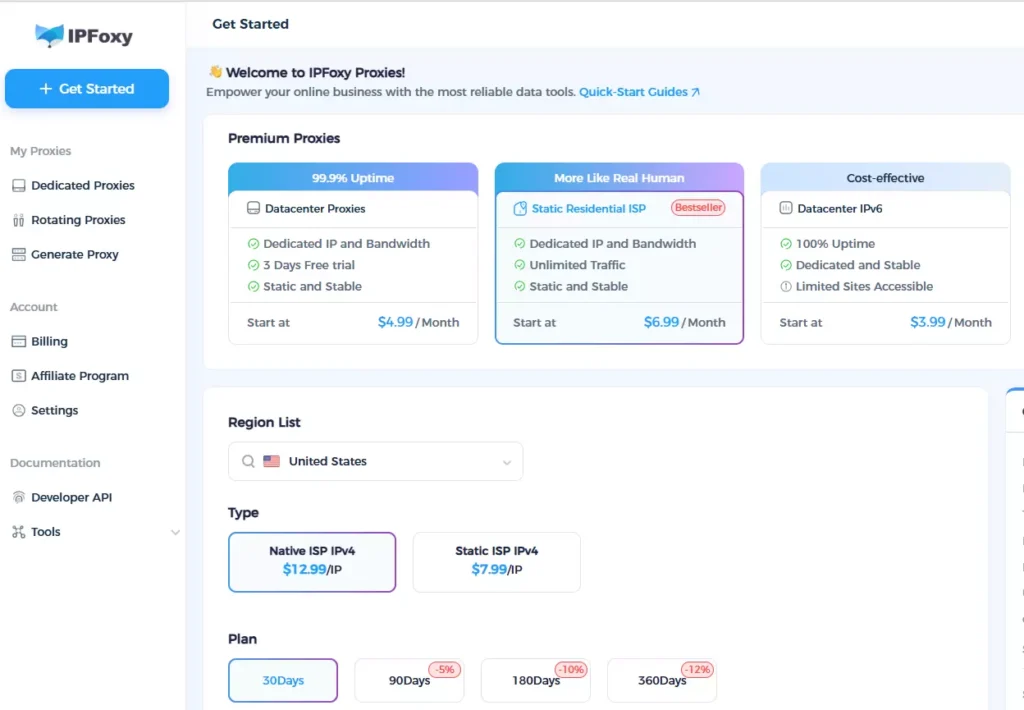
A stable setup includes assigning each account a clean IP, such as using IPFoxy dedicated static residential proxy. Choosing a location that matches registration helps reduce risk on high-control platforms.
Key practices:
- Gradual activity increase: start with browsing and light interaction, then scale up naturally
- Realistic behavior patterns: combine browsing, replying, and timed interactions
- Clear role separation: Telegram for outreach, WhatsApp for communication, LinkedIn for trust building
3. Multi-account operations and environment isolation
As operations scale, multi-account setups become essential, but also introduce risks such as account linkage and instability.
Common risk scenarios:
- Long-term account management across regions
- Multiple accounts sharing the same network
- Frequent verification or location mismatch
To ensure stability:
- Environment isolation: each account should run in an independent environment using Anti-detect browser or cloud devices, combined with clean, location-consistent IPs. Using IPFoxy dedicated static residential proxy integrated into multi-account tools enables a “one account, one environment, one IP” setup, reducing risk
- Behavior distribution: avoid synchronized actions across accounts. Stagger login times, messaging patterns, and browsing behavior to simulate real users and reduce detection
IV. FAQ
Yes. In the US, strict regulations apply to spam messaging. Sending many unsolicited messages or receiving multiple reports can quickly lead to bans. WhatsApp Business accounts are recommended.
No. LinkedIn can detect automated behavior. It is recommended to limit requests to around 20 per day and include personalized messages. Quality matters more than quantity.
Telegram and WhatsApp offer the best automation capabilities due to open APIs. LinkedIn currently supports only semi-automated assistance.
V. Conclusion
In US market lead generation, the key is not choosing a single best tool, but combining them effectively.
For scalable operations, success depends more on system-level capabilities beyond tools, including execution rhythm, account management, and environment stability. Only by optimizing all these factors can you achieve higher efficiency and long-term growth.