












Proxy IP stability depends on more than just whether it can successfully connect—proxy IP purity is equally crucial. In operational scenarios such as account registration, shop management, and ad verification, an IP historical abuse records, risk scores, and geolocation can all directly influence platform risk evaluations. This article examines key aspects of proxy IP purity, explains how to check and test it, and helps you determine whether an IP meets your operational requirements.
I. Why Is Proxy IP Purity Essential?
Proxy IP purity primarily reflects the usage reputation and risk status of an IP address when serving as a network exit node. If an IP has been heavily shared among multiple users or carries extensive abnormal activity logs, target platforms may categorize traffic from that IP as high-risk, leading to obstacles during account registration, login, data access, or other automated actions.
Looking at proxy resource types, proxy attributes do not automatically equal proxy quality:
- Free / Shared Proxies: Shared simultaneously by multiple users, leading to complex usage environments and unpredictable historical records.
- Datacenter Proxies: Typically carry distinct hosting or data center network tags, which many online platforms easily identify.
- Residential Proxies: Assigned from ISP subnetworks closer to standard home broadband. Certain dedicated options offer fixed single-user allocation, making them ideal for tasks requiring high network stability.
However, proxy type alone does not dictate absolute IP purity. Even with residential proxies, you must verify whether the IP is dedicated, whether it has been recycled, and whether it holds past risk flags.
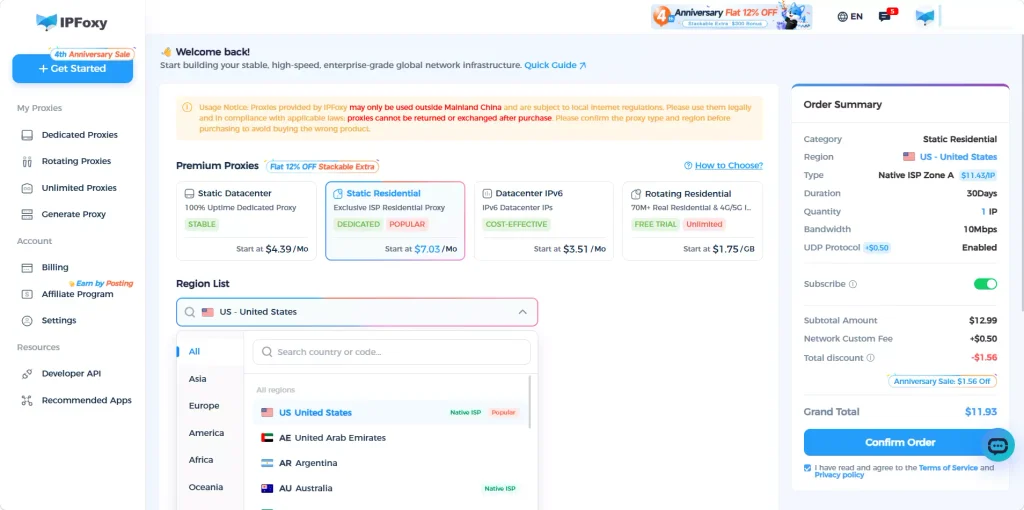
For operations demanding higher network quality, a dedicated static residential proxy is an ideal exit node. For example, IPFoxy provides dedicated static residential proxy resources that allocate IP exclusively to one user for long-term use. This design minimizes multi-user overlap, reduces the risk of shared abuse, maintains high purity and domain reputation, and shields your setup from the instability or sudden platform risk controls associated with shared or frequently rotated IP.
II. Proxy IP Purity: 3 Core Dimensions and Detection Methods
To determine if a proxy IP fits your workflow, do not rely solely on a “clean” marketing label. You should run checks using specialized diagnostic tools alongside direct target platform testing. Below are common testing frameworks illustrated with live test cases using IPFoxy proxies.
1. Blacklists and Abuse Records
Blacklists and abuse records reveal whether an IP carries noticeable historical risk indicators. If an IP has been reported multiple times or logged for spam, port scanning, or malicious behavior, its overall trust rating is compromised.
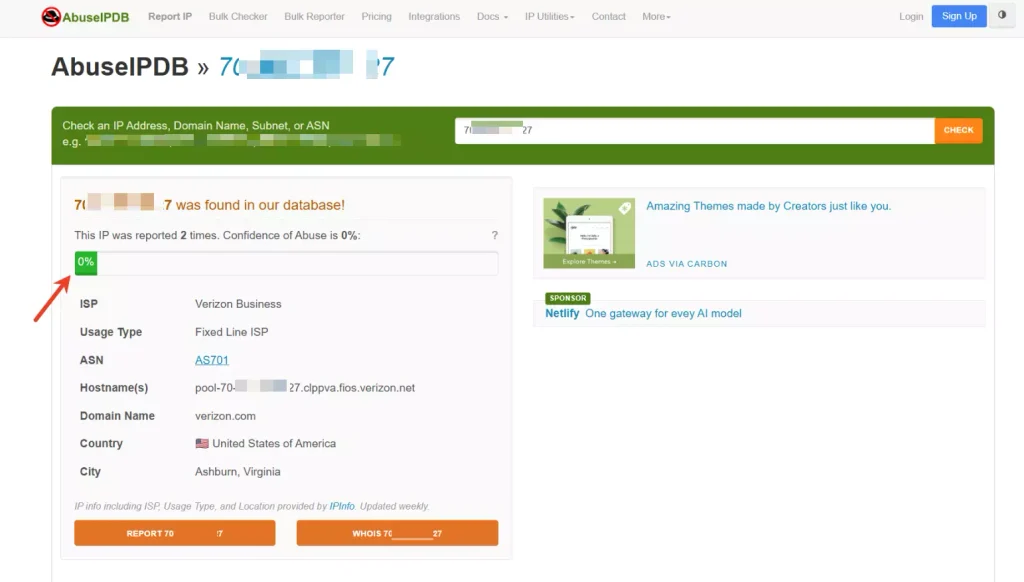
You can check metrics like total report counts and recent abuse timestamps using platforms such as APIVoid and AbuseIPDB. Note that a single past entry does not automatically mean an IP is currently unusable; the overall count, recency, and nature of the logs matter far more.
When testing an IPFoxy proxy IP on AbuseIPDB, a risk score of 0 combined with an absence of recent abuse reports indicates low public risk signals in that database.
2. Fraud Risk and Reputation Scores
Fraud risk scoring focuses on evaluating whether an IP is currently flagged as a high-risk connection. Diagnostic services like Scamalytics and IPQualityScore inspect whether an IP is categorized as a Proxy, Tor node, or Hosting provider, combining IP reputation, Autonomous System Number (ASN) details, and historical logs to calculate an overall risk rating.
Testing an IPFoxy proxy IP on Scamalytics yields a Fraud Score below 10, signaling strong IP reputation and clean routing attributes.
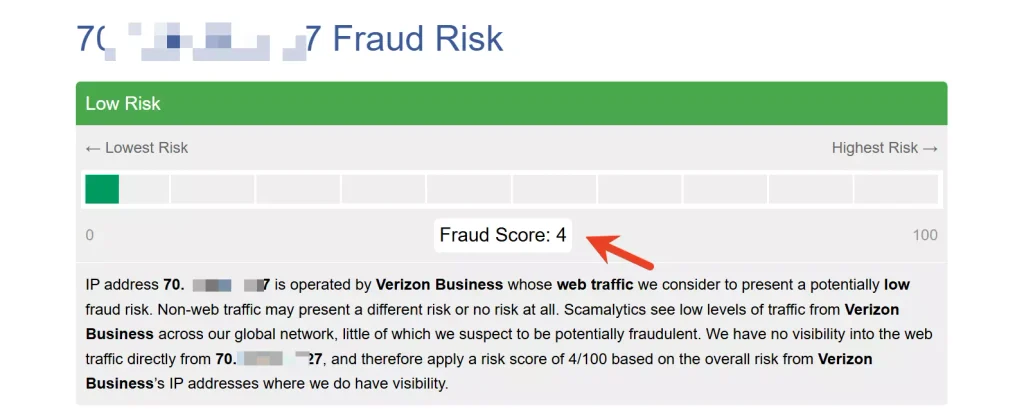
Because evaluation formulas vary across security providers, focus less on minor score differences and more on major high-risk tags or whether multiple tools yield consistent assessment results.
Additionally, route traffic through the proxy to access your target platforms directly. Observing whether you encounter frequent CAPTCHAs, access blocks, or identity checks helps verify if real-world performance aligns with tool scores.
3. Historical Risk Trend
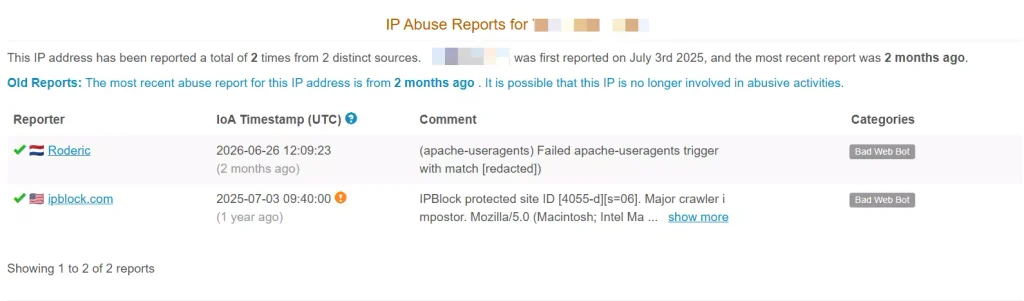
A single test only captures an IP’s condition at a specific moment, but IP reputation shifts over time. If risk flags cluster within recent weeks or abuse reports spike continuously, the IP’s overall trust status is likely degrading.
Therefore, alongside instantaneous scores, examine the timing, frequency, and trend of past flags to ensure long-term reputation stability—a crucial step in evaluating purity.
By querying tools like IPQualityScore (IPQS), AbuseIPDB, and Spamhaus, you can review abuse history, report frequency, and past proxy detection flags to see if risks are concentrated in recent periods.
An IP with a few isolated reports years ago differs significantly from one facing an ongoing wave of fresh abuse reports.
4. Real-World Platform Testing
While online tools provide diagnostic metrics, final validation must occur in your actual working environment. If an IP appears clean in automated tools but triggers constant errors on target websites, tool scores alone cannot justify using it.
1)Search Engine Behavior Checks
Take Google Search as an example: if search queries regularly trigger CAPTCHA prompts (such as image selection or reCAPTCHA challenges), Google likely views your IP’s traffic patterns as automated or suspicious.
Switching to a different proxy and running the same test can help isolate whether the initial IP has underlying reputation issues.
2)Accessing High-Security Forums
Try loading platforms protected by strict Cloudflare security rules, such as BlackHatWorld or Reddit. If you repeatedly encounter “Checking your browser” loops or connection failures that clear up after switching proxies, your original exit node likely carries high risk sensitivity.
3)New Account Registration Tests
Attempt to create test accounts across platforms like Twitter, Instagram, or Gmail. Watch for frequent CAPTCHA prompts, immediate account suspensions after registration, or unusually complex verification steps. Consistent friction indicates the platform may have flagged the IP block.
A balanced evaluation approach uses 2–3 diagnostic tools for cross-verification + 1 live platform test. This limits unnecessary traffic exposure while ensuring test results accurately reflect real operational environments.
III. Which Scenarios Demand High Proxy IP Purity?
1. Multi-Account Registration and Long-Term Operation
Modern e-commerce and social media teams regularly manage numerous accounts across networks like TikTok, Facebook, and Amazon. Registering, logging into, and managing these accounts over time requires stable, predictable network connections. Using low-quality or abused IPs often leads to failed sign-ups or instant account bans because platform algorithms interpret the IP as untrusted or high-risk.
2. Data Collection and Price Monitoring
Web scraping and data collection involve sending high volumes of requests over short periods. If a proxy IP carries past abnormal access logs, target servers easily flag incoming requests as high-risk traffic, triggering CAPTCHAs, rate limits, or temporary IP bans.
For continuous tasks like price monitoring or web crawlers, high-purity proxy IPs minimize request failures caused by poor exit node reputation, keeping data ingestion pipelines stable.
3. Ad Verification and SEO Tracking
SEO tracking and ad verification require accurate simulations of organic user visits within target regions to inspect search rankings, ad placements, and localized landing pages. If the proxy IP carries high risk scores or poor reputation, advertising platforms or search engines may restrict visible output or mandate additional verification, leading to distorted market data.
IV. FAQ
A high purity score is a strong positive reference, but you should not rely on a single score value. Different diagnostic platforms use distinct data feeds and scoring models. Always combine blacklist lookups, fraud ratings, IP classification tags, and geolocation parameters for a complete assessment.
Not necessarily. “Residential” defines the network allocation category, not its usage history. A residential IP can still carry past abuse records, proxy detection flags, or security blacklists if previous users misused it.
Security databases rely on different data collectors, update frequencies, and risk algorithms. Variance in scores across platforms is normal; running cross-checks across multiple reputable databases gives the most reliable picture.
IP purity is only one factor in security evaluations. Online platforms also analyze account activity history, request frequency, browser finger-printing, device environments, and user behavior patterns. A clean IP score alone does not guarantee a completely friction-free experience if other signals trigger security checks.
V. Summary
Evaluating proxy IP purity requires looking beyond a single risk score. You must assess blacklists, abuse history, fraud risk, long-term reputation trends, geolocation details, and network types together. In practice, cross-verify metrics using multiple diagnostic tools and validate performance directly on your target platforms. For long-term operations, review IP health periodically rather than treating a single initial check as a permanent guarantee.