












In recent years, the Middle East has become one of the fastest-growing regions in global e-commerce. Compared with the highly saturated markets in Europe and the United States, the Middle East still offers strong growth potential. Platforms such as Noon and Amazon Middle East provide different entry paths for various types of sellers.
So what are the real differences between these two platforms in actual operations? And which one is better suited for your business model and strategy? This article breaks down the market trends, platform comparison, and operational strategies to help you understand how to enter the Middle East e-commerce market effectively.
I. New Trends in the 2026 Middle East E-commerce Market
In the past few years, the Middle East has been considered one of the “last blue oceans” in global e-commerce. By 2026, this trend still holds, but competition and entry barriers are increasing. The market is gradually shifting from a high-growth phase to a more refined operational stage.
At the same time, the platform landscape is becoming clearer. Noon is more promotion-driven with relatively lower entry requirements, while Amazon Middle East has a more mature system that relies on refined operations and long-term brand building. Opportunities still exist, but seller capabilities are now more important than ever.
Consumer behavior is also changing, shifting from price-driven decisions to greater focus on delivery speed, product quality, and after-sales service. Logistics systems and local fulfillment capabilities are becoming critical. In addition, regulations are tightening, and VAT compliance and business verification are now basic requirements. For sellers, the Middle East remains a high-potential market, but sustainable profitability now depends on product selection, operations, and compliance rather than simple low-price strategies.

II. Noon vs Amazon Middle East: Which One Should You Choose?
In the Middle East market, Noon and Amazon are not simply alternatives. They represent different stages, resource levels, and operational approaches. Understanding their applicable scenarios is more important than making a direct comparison.
1. Product Type Differences
Noon is more suitable for:
● Standardized products with simple SKUs
● Price-sensitive products
● Fast-moving consumer goods, small home items, daily necessities
● Products suitable for platform promotions
Amazon Middle East is more suitable for:
● Differentiated or branded products
● Mid-to-high ticket items
● Electronics, personal care, upgraded home products
● Products that rely on content optimization to improve conversion
2. Traffic Acquisition Model
Noon follows a “platform distribution-driven” model:
● Heavy reliance on platform campaigns and promotions
● Price strongly impacts visibility
● Organic traffic is relatively easier to obtain
Amazon follows a “data-driven traffic” model:
● Advertising is the core traffic source
● Keyword ranking determines exposure
● Continuous optimization of CTR and conversion is required
3. Cost and Operational Structure
Noon:
● Lower initial investment
● Less dependence on advertising
● Suitable for budget testing
● Simpler operational structure
Amazon:
● Higher advertising cost ratio
● Higher inventory and capital requirements
● Continuous investment required
● More refined operations
4. Seller Profile
Noon is better for:
● Beginners or small teams
● Sellers with limited budgets
● Those testing the Middle East market
Amazon is better for:
● Experienced sellers with team support
● Sellers with ad budgets and supply chain capabilities
● Long-term business builders
III. Operational Strategies for Noon vs Amazon Middle East
1. Noon: Promotion and Price-Driven Strategy
Noon focuses on platform-distributed traffic. The key is leveraging promotions and price advantages.
Core strategies:
● Product selection: standardized, cost-effective products such as FMCG, small home goods, and daily essentials
● Pricing strategy: maintain competitiveness while reserving discount space for promotions
● Promotion participation: use flash sales and discount zones to boost exposure and sales
● Listing expansion: test multiple SKUs and scale high-performing products
● Logistics: prioritize platform fulfillment for faster delivery
2. Amazon Middle East: Data-Driven Optimization Strategy
Amazon emphasizes structured growth through listing optimization, advertising, and reviews.
Core strategies:
● Product selection: differentiated or upgraded products to avoid direct competition
● Listing optimization: strong visuals and A+ content to improve conversion
● Advertising: use ads to boost organic ranking and refine keyword bidding
● Review management: focus on acquiring genuine reviews early
● Inventory & logistics: use fulfillment services and manage stock carefully
3. Localization Strategy
As the market matures, sellers are shifting from cross-border shipping to localized operations. Localization is now a system-level requirement.
(1) Fulfillment localization
● Use local or platform warehouses
● Pre-stock inventory to improve delivery speed
(2) Product and pricing localization
● Adjust product mix based on local demand
● Optimize pricing strategies for regional preferences
(3) Operational timing localization
● Align with local sales seasons (e.g., Ramadan)
● Plan inventory and campaigns in advance
(4) Account environment localization
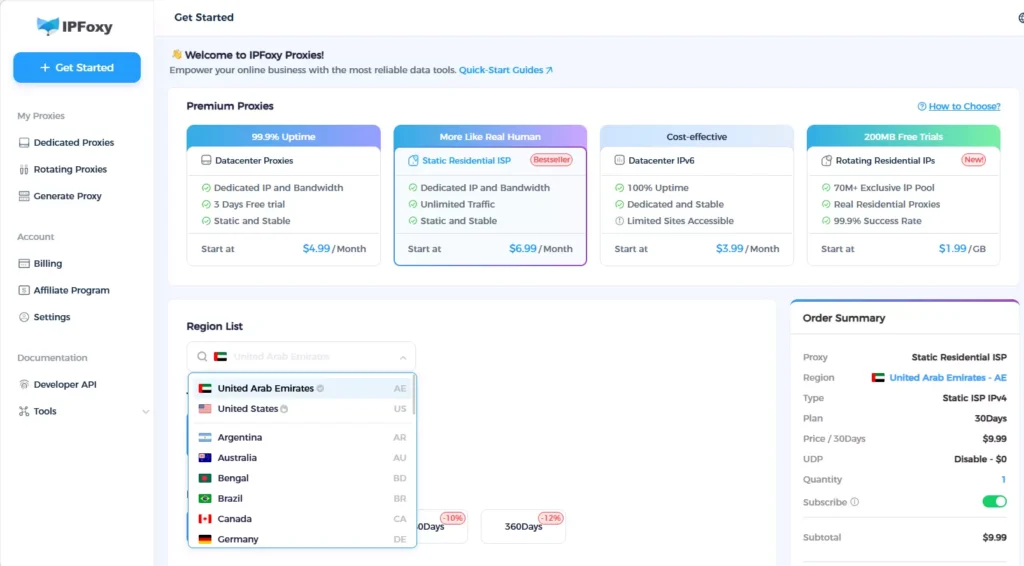
Accounts consistently operating with local residential IP environments are more likely to receive organic traffic distribution. Sellers can configure IPFoxy dedicated static residential proxy IPs for account operations, helping create a more “real user-like” environment and improving exposure potential.
4. Matrix Operations Strategy
Once single-store operations are stable, many sellers expand into multi-store matrix models. This allows testing multiple listings, expanding product coverage, and reducing risk from single-account dependency.
In multi-account operations, environment isolation is critical:
- Independent IP addresses: each account should use a dedicated, clean static residential proxy like IPFoxy to avoid shared or low-quality IP risks
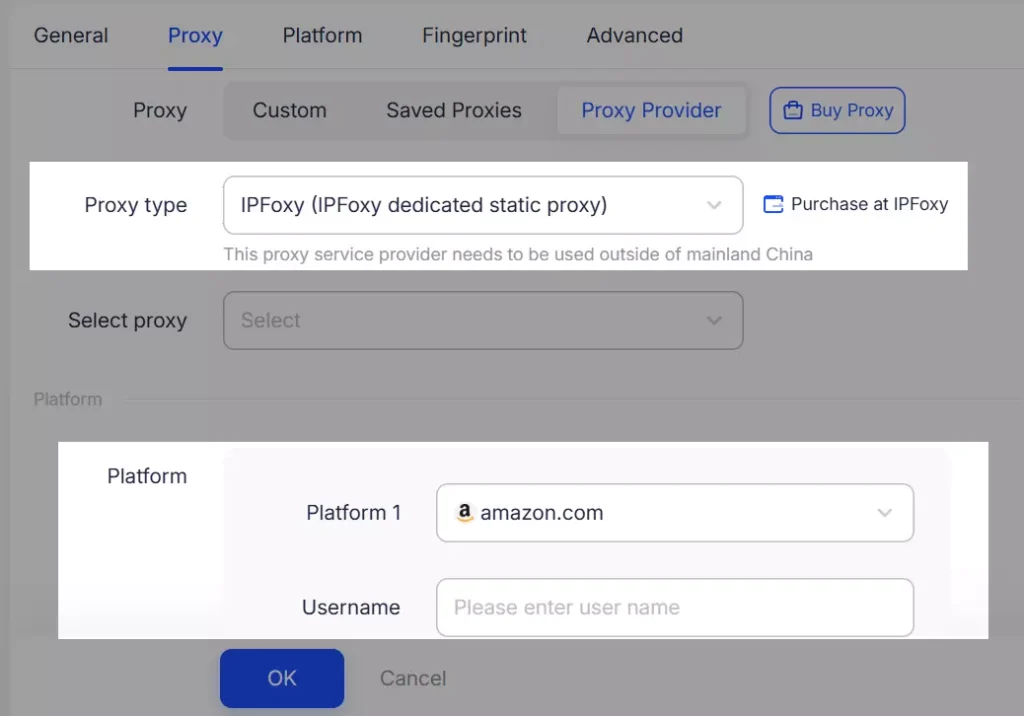
- Independent device fingerprints: simulate different browser environments using anti-detect browser or cloud-based tools to separate accounts
IV. FAQ
Noon is generally easier for beginners and faster product testing, while Amazon requires more experience and advertising investment.
In most cases, yes—especially in the UAE and Saudi Arabia. Requirements depend on revenue and platform rules, but early preparation is recommended.
Yes, but usually only under a cross-border model. Some features and traffic advantages may be limited. Long-term success benefits more from local setup.
V. Conclusion
There is no single “best” platform choice in Middle East e-commerce. The key is aligning your resources, stage, and goals with the right path. From rapid testing on Noon to refined scaling on Amazon, and further into localization and matrix expansion, sellers need a clear strategic roadmap. Only by aligning platform selection, operational execution, and infrastructure can stable long-term growth be achieved.