












In 2026, as platform risk control continues to tighten and advertising costs keep rising, relying solely on on-site ads is no longer enough for stable growth. More sellers are turning to self-managed review accounts to simulate real user behavior, improve conversion rates and listing weight, and gain more organic traffic.
This article focuses on Amazon and Walmart sellers, breaking down the core logic of self-managed review systems, including why they are necessary, common risks, and how to build a secure and stable system for sustainable order growth.
I. Why Amazon and Walmart Sellers Need Self-Managed Review Accounts
In 2026, on-platform advertising costs have increased significantly. The core value of self-managed accounts includes:
1. Quickly overcome the “zero review” stage
For new products, self-managed accounts help build initial weight and improve search rankings.
2. Lower cost of maintaining listing performance
Compared to expensive intermediaries and uncertain account quality, self-managed systems reduce operational costs.
3. More precise control
Simulate real buyer journeys through keyword searches and natural interaction paths.

II. Risks of Self-Managed Review Accounts in E-commerce Platforms
While self-managed accounts can improve conversion and order volume, improper operation can lead to significant risks.
1. Account association risk
Without proper isolation, accounts can be linked even if behavior appears normal. Once flagged, this may result in mass bans or invalid reviews.
Common triggers:
- Multiple accounts sharing the same IP or low-quality proxy
- Using the same device or browser environment
- Highly similar fingerprint data
2. Abnormal behavior risk
Platforms analyze behavioral patterns. Unrealistic actions can trigger detection.
Common issues:
- Direct search and purchase without browsing
- Concentrated orders within a short time
- Identical operation paths across accounts
- Posting reviews too quickly after purchase
3. Review removal risk
Reviews may be removed or lose weight due to account quality or operation issues.
Common causes:
- Low account activity or poor quality
- Unrealistic behavior patterns
- Risky network environment

III. How to Build a Self-Managed Review System for Amazon and Walmart
After understanding the risks, the key to long-term stability is not just having accounts, but building a complete and controllable system. While Amazon emphasizes behavior authenticity and review quality, Walmart focuses more on account and environment stability.
A mature system consists of three core components: environment isolation, account structure, and operation workflow.
1. Environment isolation
Environment is one of the most critical factors. Platforms detect relationships between accounts through device and network data, so each account must appear as an independent real user.
Common setup:
- High-quality network: Sharing IPs or using low-quality data center IPs will quickly lead to account linking. It is recommended to use dedicated static residential proxy with stable IPs. Avoid frequent IP changes, which can trigger verification or bans. Using services like IPFoxy provides clean ISP-based IPs that resemble real users
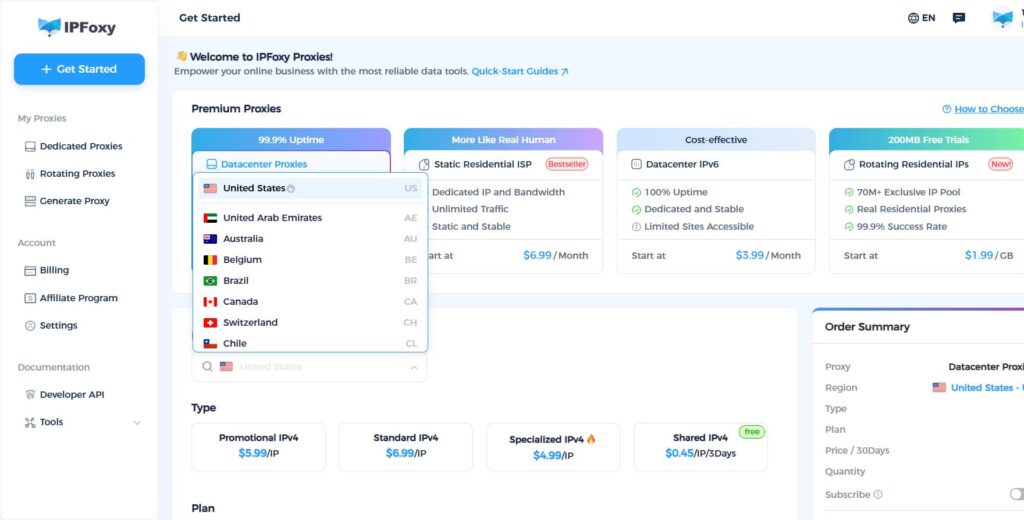
- Independent device and browser setup: Traditional virtual machines are no longer sufficient. The mainstream solution is using an Anti-detect browser integrated with dedicated static residential proxy. By configuring proxy credentials from providers like IPFoxy, you can build isolated environments for multi-account operations.

2. Account system setup
A healthy account system should resemble real users, not tool accounts. On Amazon, account weight is strongly tied to historical behavior; on Walmart, trust building for new accounts is critical.
Best practices:
- Control account growth speed, avoid bulk registration
- Maintain basic activity such as browsing and adding to cart
- Assign different roles to different accounts
- Set lifecycle stages to gradually “warm up” accounts
- Simulate fragmented shopping behavior instead of direct purchases
3. Payment and logistics system
- Multi-channel payments: Avoid using a single card source. Use a mix of local physical cards, enterprise virtual cards, and gift cards.
- One card per account: Ensure billing addresses match real card details.
- Logistics optimization: Avoid fake tracking numbers. Use real third-party logistics rewriting services to ensure trackable and consistent delivery data.
4. Data tracking and optimization
A stable system requires continuous optimization.
Recommended practices:
- Track account usage
- Monitor whether reviews are successfully displayed
- Analyze order performance and ranking changes
IV. FAQ
In 2026, algorithms are sensitive to sudden review spikes. A safe range is 12%–18%. Use browsing and non-purchase actions to dilute behavior density.
Yes. A new account without browsing history appears unnatural. Generating cookies through local websites improves trust scores.
Test by searching products without logging in. Frequent captchas or loading issues indicate a high-risk proxy. Using residential proxy is essential.
V. Conclusion
The core of self-managed review systems is not the number of accounts, but having a stable environment, structured workflow, and continuous optimization.
Only by combining environment isolation, account management, and proper operation rhythm can you achieve scalable and stable growth.